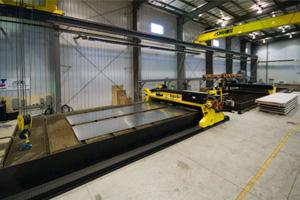
Water jet glass cutting is often used to create artistic glass designs such as in detailing in stained glass, mirrors, ornaments of all sizes, glass awards, replacing windows in antique cars and many other practical applications. This versatility makes water jet glass cutting especially useful. However while there are few limitations in what these tools can do, there are a few things to consider when using a water jet for glass cutting.
These required considerations are;
-
The Quality of the Glass
-
The Support of the Glass
-
The Timing of Abrasive and Water Delivery
-
Temperature
-
The Design of the Glass Part
The quality of the glass is a very important starting point. A low quality or thin glass is not ideal for water jet cutting, though it can be done extra care is required. Ideally, a thick, high quality glass would be the best choice for most projects. These high quality glasses are also far more durable than low quality which tend to be brittle and make the water jet cutting process more difficult.
Also it should be noted that tempered glass is impossible to cut. Tempered glass is created to be constantly under stress, so if an attempt to cut it is made it removes this stress and will cause the glass to shatter.
When glass is being cut by water jet, it's also important to consider how it is being supported while the cutting is occurring. An even support that is soft enough so the water jet doesn't bounce back as it hits it is ideal. Two common supporting pieces are Styrofoam or a solid sheet of plywood. These provide a good support, but most importantly, they must be level.
Water jet glass cutting uses an abrasive particle suspended within the pressurized water. When considering, it's important to regulate the timing of the water and abrasive. It's critical for the abrasive to hit the glass at the exact moment the water hits the glass. Water with no abrasive in it will cause the glass to simply break.
Some tips with regard to abrasive and water;
-
Turn on the abrasive before the water or concurrently.
-
Use a scrap piece initially to test the flow of both.
-
Cut at the edge of a piece of glass or from a previous hole.
-
Start at a low PSI and turn up the pressure slowly.
Being aware of temperature changes is also important. Fluxuations from hot to cold can cause glass to break. If your glass is hot and the water you are using to cut with is cold, this differential may cause the glass to shatter.
Lastly, consider the design. Ideally use long lead ins to protect from cracks. Should a crack occur early into the piercing of the glass, it is less likely to make it's way to the design if it has a long lead in. The more piercings in a design will result in a higher likelihood of it cracking. Minimizing the number of piercings is key, especially in very detailed designs.
In summary, consider the quality of your glass, the support you provide for the glass when cutting, the timing of the abrasive and water, the temperature and the design. Taking these five items in consideration when doing a water jet glass cutting project will result in a higher quality cut glass once complete.